
SLX-D Quad-Channel Digital Receiver


More Details

Similar Products

glensound-dark16ao
  • Glensound

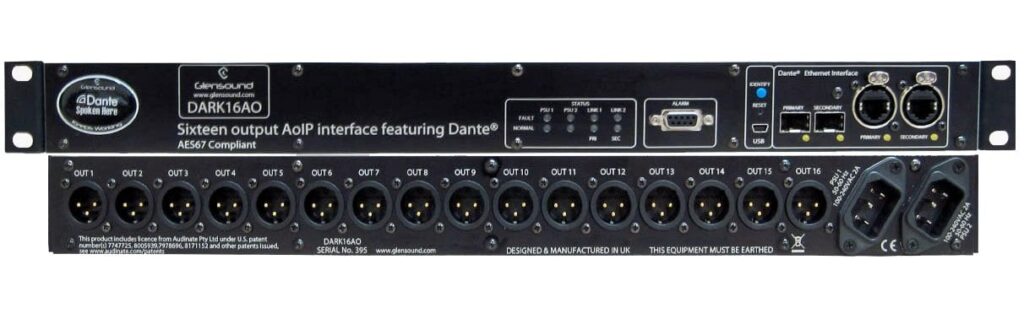
Glensound – DARK16AO

The DARK16AO provides 16 low noise balanced analogue audio outputs from a Dante network. It features redundant power supplies and a redundant network interface. The DARK16AO is a versatile break out box for receiving analogue audio from a network utilising the Dante® and AES67 audio over IP (AoIP) protocols. In total there are 16 channels of audio being received from the AoIP network and converted via low noise DACs (Digital to Analogue Converters) to balanced analogue outputs. For ease of cabling audio outputs are presented as balanced circuits on Neutrik XLRs. Being designed for resilient broadcast applications the DARK16AO features both redundant power supplies and redundant Dante® network links with link status GPOs (general purpose outputs (solid state relays)). Both primary and secondary network links are provided with both magnetic (copper RJ45) and fibre (SFP) interface connections. The Dante® system itself provides a completely transparent redundant link system which means that if the DARK16AO lost its primary link circuit the secondary link would automatically take over with no loss of audio.
    I/O Interfaces
  • Dante Ch: 16 In
  • 24-bit
ad4d
  • Shure

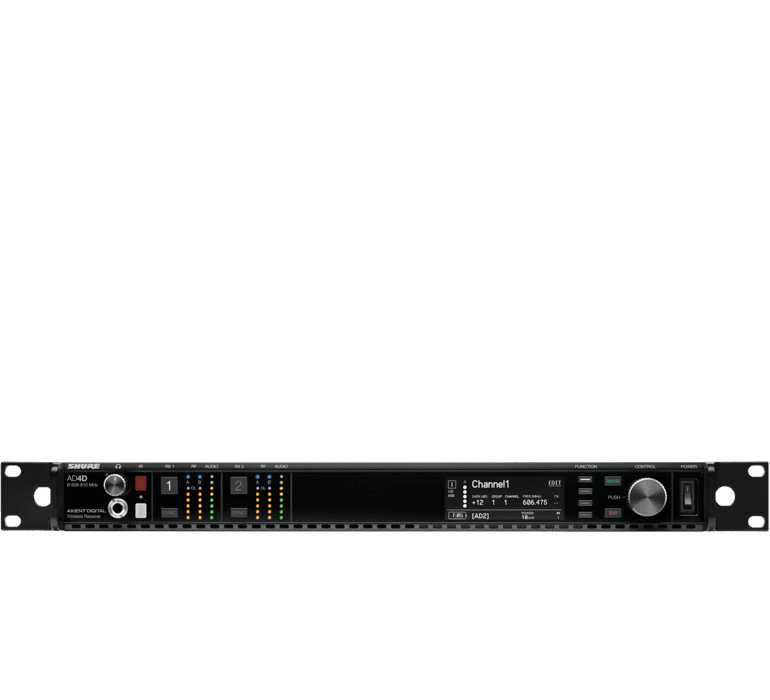
Shure – AD4D

Axient Digital offers dual and quad receiver options that open the door to a full range of features, from high-performance RF to transparent digital audio.

The AD4D Two-Channel Digital Receiver sets a new standard in spectral efficiency. Groundbreaking performance features include wide tuning, low latency, and High Density (HD) mode, ensuring solid performance in the most challenging RF environments. Networked control and signal routing options bring a new level of management and flexibility to your entire workflow.

    I/O Interfaces
  • 24-bit
  • 48kHz-96kHz
2017324144858
  • BARE

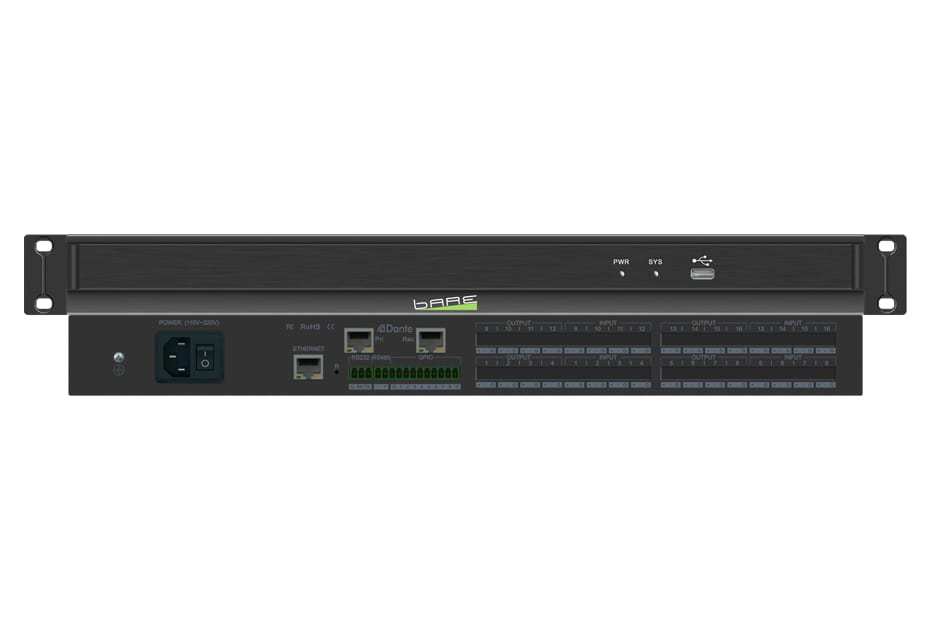
BARE – BR-1016

 BR-1016 network audio processor is an audio processing and control system that can be freely designed. It uses advanced DSP processing technology and has a new algorithm of automatic mixing and feedback cancellation, which can solve various practical problems in application scenarios. Since most of the controls are operated by software, the appearance is more concise and lively. The operator only needs to click the mouse lightly, instead of adjusting complex large-scale mixers on the spot to complete the function conversion as before, which greatly simplifies the operation.

    I/O Interfaces